Understanding the Three Main Wood Destroyers
Homeowners in Fort Wayne often face a troubling question: what's eating away at my wooden beams, joists, and siding? The answer could be one of three culprits: wood rot, termites, or carpenter ants. While all three cause structural damage, they work in completely different ways, and the treatment approach depends on correctly identifying which pest or decay process you're dealing with. Misdiagnosing the problem can lead to wasted money on the wrong solution and allow the real damage to continue unchecked.
Understanding these three wood destroyers is the first step toward protecting your home. Each leaves distinct clues, damages wood in unique patterns, and requires a different response strategy. Whether you're noticing soft spots in your foundation, mysterious tunnels in your walls, or small holes near your baseboards, this guide will help you determine what you're up against and when it's time to call in a professional for Wood Rot & Dry Rot Repair or pest-related damage assessment.
What Does Wood Rot Look Like? Identifying Fungal Decay
Wood rot is a fungal infection, not an insect infestation. It occurs when moisture penetrates wood and creates the perfect environment for fungi to thrive. Unlike termites or carpenter ants, wood rot doesn't involve any living creature actively consuming your wood, but the damage is just as serious. The key to identifying wood rot is recognizing its visual and tactile characteristics. Wet rot typically appears as dark, almost black discoloration on wood surfaces, often accompanied by a soft, spongy texture. Dry rot, which is common in Fort Wayne basements and crawl spaces, creates a lighter brown color and causes wood to become brittle and crack into cube-like patterns.
When you press your finger or a screwdriver into rotted wood, it will give way easily, almost like pushing into wet sponge. The wood may also emit a musty, earthy odor, which is the smell of the fungal growth itself. You might notice paint bubbling or peeling away from affected areas, as the rot underneath causes the wood to expand and contract unevenly. Rot typically spreads from areas of poor drainage or water intrusion, so look for it near gutters, around window frames, under porches, and in basement joists. The damage pattern is usually somewhat random and spreads outward from moisture sources, unlike the organized galleries created by termites.
Termite Damage vs Other Wood Damage: What to Look For
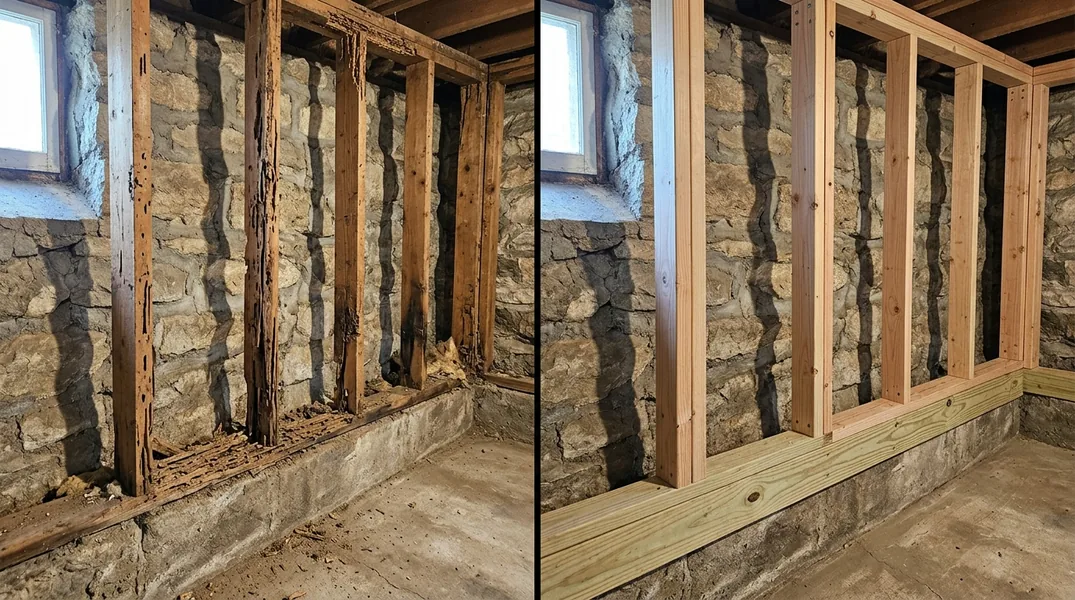
Termites are insects that feed on cellulose, the main component of wood. When identifying Termite Damage Repair situations, the most distinctive feature is the presence of mud tubes. Subterranean termites, which are the most common species in the Midwest, build pencil-thin tunnels made of soil and saliva as they travel between the ground and your home's wooden structures. These tubes run vertically up foundation walls and are a dead giveaway of termite activity. Another key indicator is the hollow sound wood makes when tapped. Termites eat wood from the inside out, leaving a paper-thin shell on the surface while gutting the interior. This creates a distinctive honeycomb pattern of galleries and tunnels inside the wood.
Unlike wood rot, termite damage is highly organized and follows the grain of the wood in neat, parallel tunnels. You may also notice discarded wings near windowsills or entry points, as termites swarm during certain seasons. The damage is typically found near the foundation or ground level, since subterranean termites need to maintain contact with soil moisture. If you tap on affected wood, it will sound hollow and may crumble easily, but the surface often appears intact until you break through it. Termite frass (droppings) may be visible as small pellets near damage sites, though this is less common with subterranean termites than with drywood termites.
Carpenter Ant Damage vs Termite Damage: Key Differences
Carpenter ants and termites are often confused because both tunnel through wood, but they're fundamentally different creatures with different damage patterns. Carpenter ants are large black or red ants that excavate wood to create nesting galleries, but they don't actually eat the wood like termites do. Instead, they remove it to make room for their colonies. This means carpenter ant damage tends to be cleaner and more deliberate, with smooth, well-defined tunnels and galleries. You may find sawdust-like frass (actually wood shavings mixed with ant droppings) piled near the entrance holes, which is a telltale sign. Carpenter ants are also much larger than termites, so you're more likely to see the actual insects if you inspect the damage area.
The distinction between carpenter ant damage and termite damage becomes clear when you examine the wood closely. Carpenter ant galleries are typically smooth-walled and almost surgical in appearance, while termite tunnels are rougher and often lined with mud or saliva. Carpenter ants also prefer to nest in moist, damaged wood, so you'll often find their activity in areas that already have some rot or water damage. Unlike termites, carpenter ants don't require constant ground contact, so they can establish colonies anywhere in your home that offers suitable conditions. You might also notice carpenter ants actually moving around during the day, especially in spring and early summer when they're most active. If you see large black ants near your wooden structures, that's a strong indicator of carpenter ant activity rather than termites.
Wood Rot & Dry Rot Repair Near Me: When to Call a Professional
Once you've identified the problem, the next question is whether you can handle it yourself or need professional help. Small areas of surface wood rot might seem manageable, but the reality is that fungal decay spreads quickly and often extends much deeper than what's visible on the surface. Professional Wood Rot & Dry Rot Repair specialists have the tools and expertise to assess the full extent of the damage, identify moisture sources, and recommend comprehensive solutions. This might include replacing affected wood, installing proper ventilation, improving drainage, or treating underlying moisture problems. Attempting a DIY repair without addressing the root cause means the rot will likely return, and you'll end up spending more money in the long run.
For termite and carpenter ant damage, professional intervention is almost always necessary. These pests require targeted treatment strategies that go beyond simple wood replacement. A professional pest control and carpentry team can eliminate the active infestation, assess structural integrity, and perform necessary repairs. In Fort Wayne, where humidity and seasonal moisture are significant concerns, having a professional evaluate any suspicious wood damage is a smart investment. Fort Wayne Carpentry can provide a thorough inspection and free estimate to help you understand the scope of work needed. Call (260) 300-5243 to schedule an assessment, or visit our website to learn more about our repair services.
Structural Repairs After Damage: What's Involved
Once the source of wood damage has been addressed, the repair phase begins. Depending on the severity and location of the damage, this might involve simple wood patching or extensive structural work. For Floor Joist & Subfloor Repair, damaged joists must be carefully replaced or reinforced to restore the structural integrity of your floors. This is not a cosmetic issue, as compromised floor joists can lead to sagging, bouncing floors, or even dangerous collapses if left unaddressed. Similarly, damage to load-bearing beams or walls requires professional assessment and often involves Beam Replacement & Load-Bearing Wall Removal work that must meet local building codes.
The scope of repairs depends on how much wood has been compromised and where the damage is located. Surface damage might only require wood filler and refinishing, while deep structural damage requires complete replacement of affected members. In all cases, prevention is key. Once repairs are complete, addressing the underlying moisture or pest issues ensures the damage won't recur. Fort Wayne Carpentry provides comprehensive repair solutions tailored to your specific situation. For details on pricing and to understand what your repair project might involve, contact us at (260) 300-5243 or request a free estimate today.
Looking for a professional carpentry contractor in Fort Wayne? Fort Wayne Carpentry responds fast for all your carpentry needs.
Get a Free QuoteOur services: Wood Rot & Dry Rot Repair · Termite Damage Repair · Floor Joist & Subfloor Repair