Carpenter in Fort Wayne, IN: Wood Rot, Structure & Finish Work
Fort Wayne Carpentry serves homeowners across Fort Wayne and the surrounding communities of New Haven, Huntertown, Leo-Cedarville, and Grabill with honest, straightforward carpentry work. Whether you're dealing with wood rot in a historic Victorian, a soft floor in a mid-century ranch, termite damage discovered after a pest inspection, or you need new trim, custom built-ins, or a deck repaired, we bring the same crew to every job. We know the local building stock, from the Italianate and Queen Anne homes of the West Central historic district to the Craftsman bungalows and foursquares across South Wayne and Williams-Woodland Park, and the newer subdivisions spreading through Aboite and Perry townships. We understand how Fort Wayne's climate and geography drive the failures that show up in your home.
Homeowners searching for a carpenter near me in Fort Wayne often call when they find advancing wood rot in a sill or deck frame, notice a floor that has gone soft or bouncy, or receive a termite report and need the damaged wood replaced. These are the problems we diagnose and repair every season. Our work spans wood rot and structural damage repair, sistering and replacing floor joists, installing beams and headers, finish carpentry and trim work, custom shelving and built-ins, and exterior repairs like fascia, soffit, and deck framing. Call us at (260) 300-5243 for a straightforward assessment.
Why Wood Fails in Fort Wayne, and How We Read It
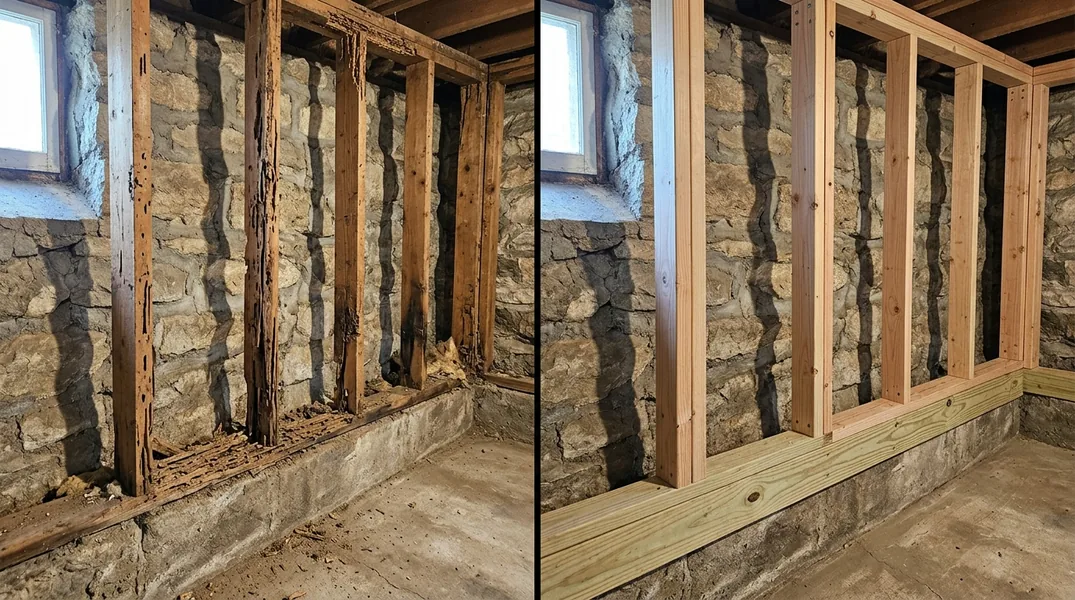
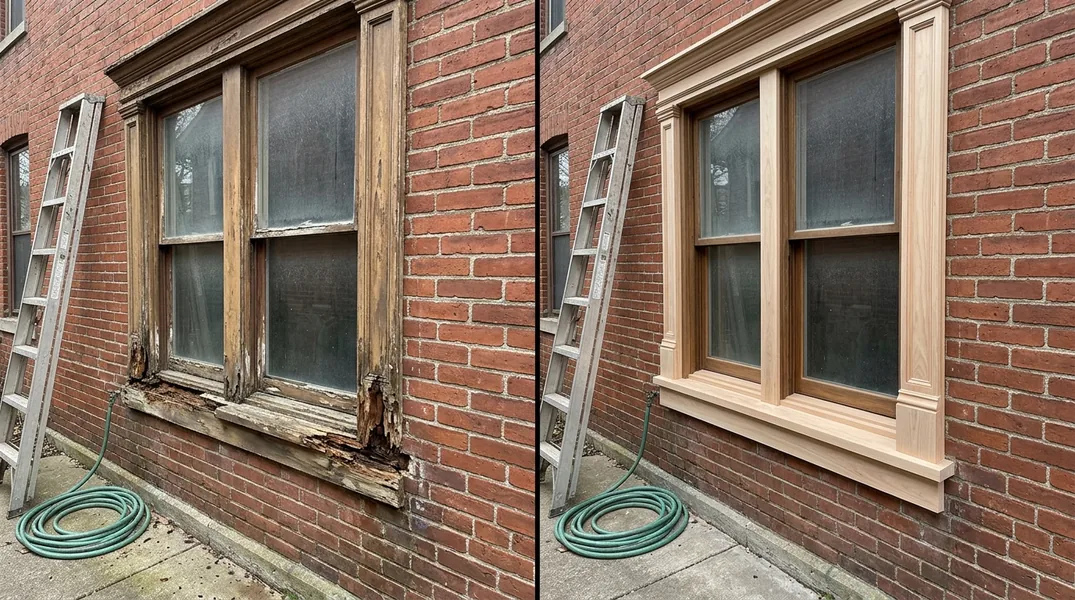
Wood fails in Fort Wayne for reasons rooted in our climate and geography. The city sits where the St. Joseph and St. Marys rivers meet, on flat glacial till, and the older riverside neighborhoods carry the legacy of high water tables, damp fieldstone basements, and low crawlspaces. Northern Indiana winters bring long freeze-thaw cycles, ice dams that push water into fascia, soffits, and window sills, while humid summers and heavy thunderstorms keep porches, decks, and exterior trim wet. This sustained moisture is where wood rot takes hold. Dry rot is not a moisture problem in the sense of standing water; it is a fungus that colonizes wood kept chronically damp, breaking down the cellulose and leaving the wood soft, crumbly, and unable to bear load. Wet rot settles into sill plates, window sills, thresholds, and deck ledgers where water sits and soaks in. The paint film may still look sound, but the wood underneath has begun to fail. Eastern subterranean termites and carpenter ants, both active in Allen County, work quietly into damp sills and porch framing, hollowing out a member from the inside while the surface still appears intact.
Assessing wood damage honestly requires more than a visual inspection. We probe to find where sound wood begins, check the framing behind the visible surface, and trace the water path that fed the decay. A member with cosmetic surface rot on a sound core can often be cut out and rebuilt with new wood, preserving the original framing. A member that has lost its cross-section, where the decay has eaten through to the other side or the wood crumbles under a screwdriver, must be replaced. The critical point is this: if the water source is not closed, the repair fails again. Filler over rot is not a repair; it is a temporary mask. When you call about rot, termite damage, or a soft floor, we will tell you what we find, what can be repaired, and what must be replaced.
On termite and insect damage, we work within our scope: we repair and replace the damaged wood, working from your own pest inspection report. We do not treat, fumigate, or perform pest control. That is a separate regulated trade, and it is not our work. What we do is replace the wood that the insects have compromised, so your framing is sound and your floor is level again. Call (260) 300-5243 or request a free wood rot inspection to start the conversation.
Structural Carpentry in Fort Wayne: Joists, Beams and Settling
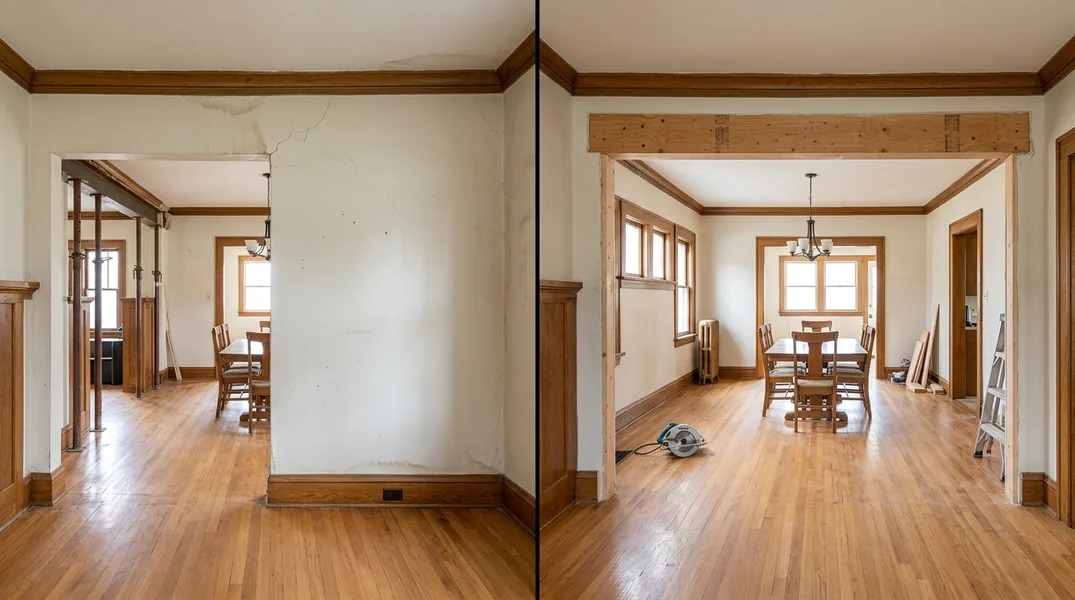
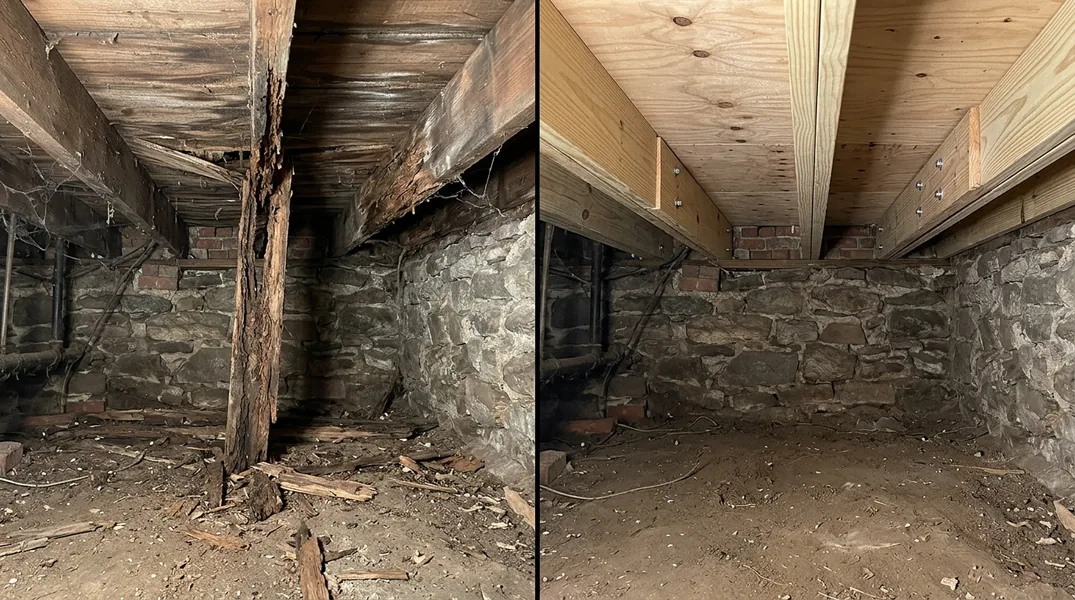
Structural carpentry, the work that holds your house up, is where we spend much of our time in Fort Wayne's older housing stock. A century of settling is normal here. Sloping floors and doors that stick in their frames are usually the slow, stable settling of a building that has been standing for generations, not a sign of active failure. What matters is whether a member is still moving, whether it is sound where it bears weight, and whether it can do its job. When a floor joist shows decay or damage, we assess whether sistering a new joist alongside the existing one will restore capacity, or whether the member should be replaced entirely. Subfloor sections can often be cut out and replaced in stages without removing the entire floor. Sill plates and rim joists at the foundation line are common repair points, especially in the older neighborhoods with damp basements. We also install engineered beams and headers to support walls and carry loads where framing has failed or where an opening needs to be enlarged.
Load-bearing wall removal and beam replacement are structural alterations that commonly require engineered drawings and a permit from the local building department. We build to those drawings; we do not produce them. Beam sizing and load calculations require a licensed structural engineer. This is not a limitation, it is the correct way to do the work safely and legally. When you have a wall you want to remove or a beam that needs replacement, we will help you understand what the project entails, and we will build it to code and to the engineer's specifications. Floor joist and subfloor repair and beam replacement work are the backbone of what we do.
Finish Carpentry and Built-Ins in Fort Wayne Homes
Finish carpentry is where the craft becomes visible: coped joints instead of caulked corners, scribing to walls that are neither flat nor plumb, consistent reveals and shadow lines, and profiles matched to the existing period millwork in your home. Fort Wayne's housing stock is full of character, bay windows, compact floor plans, out-of-square openings, and original trim worth preserving and matching rather than replacing with stock material. We install crown molding and baseboard that follows the geometry of the actual room, hang interior doors with casing that sits true, and build custom built-ins and shelving that fit the space you have. Cabinet and vanity installation, wainscoting, and stair and railing repair all depend on understanding how to work with old walls, inconsistent floors, and the settled geometry of a century-old house.
The difference is in the detail. An original newel post, stringer, and baluster system tells a story about the house and the era it was built. Replacing it wholesale destroys that. Repairing treads, tightening railings, and replacing balusters where needed keeps the original character intact. The same applies to window casing, door jambs, and the trim that defines a room. We take time to understand what is original, what is worth saving, and how to repair or extend it honestly.
Permits, Repair-or-Replace & What We Do Not Do
Permits and the decision to repair or replace wood are two sides of the same conversation. In most jurisdictions, a permit is commonly required for structural work such as removing or altering a load-bearing wall, replacing beams or joists, or altering stairs or exterior decks. Requirements and thresholds vary by municipality. Always verify with the Fort Wayne building department before starting your project to understand what applies to your work. We build to code and to any permit requirements; we do not advise on whether a permit is needed. The repair-or-replace decision, on the other hand, is straightforward: how much sound section is left in the member, whether the water source can be closed, and what the two options cost. When both repair and replacement are real possibilities, we quote both and let you decide. Some wood is worth saving; some is not. We will tell you which is which.
We are fully insured. We can help document damage for an insurance claim, but we do not promise or predict whether a claim will be approved or what coverage you will receive. That is between you and your insurer. We also do not offer structural engineering, mold assessment, pest treatment, or fumigation. Those are separate trades with their own credentials and regulations. Our scope is carpentry: wood framing, repair, replacement, and finish work. Requirements vary, and they are set by your local authority, always verify with the Fort Wayne building department before starting your project.