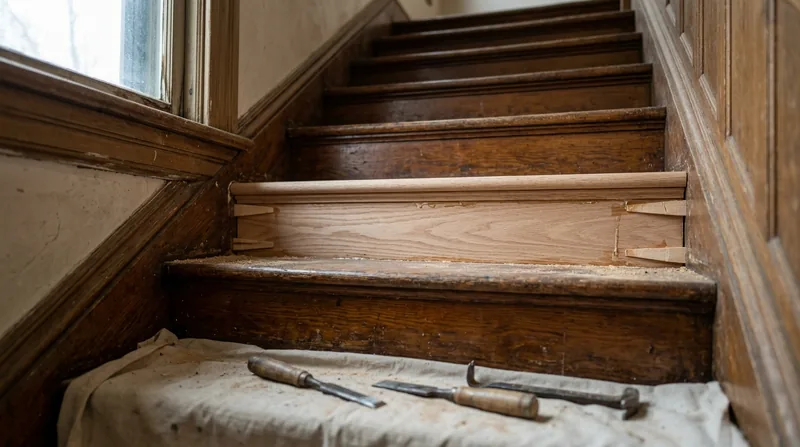




Fort Wayne's steep Victorian foursquares, Craftsman bungalows, and turn-of-the-century Queen Anne homes demand sturdy stairs and secure railings. These houses climb full stories on narrow, angular stringers built over a century ago, and the freeze-thaw cycles, humidity swings, and seasonal wood movement that come with northern Indiana winters take their toll. Squeaky treads, loose balusters, wobbly handrails, and worn stringers are common, and so are basement stairs that have settled unevenly and attic access ladders that no longer fit their openings safely. Stair and railing repair in Fort Wayne restores both function and safety, whether you need a single tread replaced, a full baluster run rebuilt, or a basement staircase reinforced. We repair and rebuild the stairs your home climbs every day, restore period railings to their original geometry, and install handrails and safety features that meet modern expectations without erasing the character of older homes.
Why Stair and Railing Repair Matters in Fort Wayne's Historic Homes
Stairs take daily abuse. Treads deflect under foot traffic, stringers twist and crack as the wood around them moves, and railings loosen as fasteners work free over decades. In Fort Wayne, where so many homes date to 1890 through 1930, the original stairs were built to last but not necessarily to accommodate modern weight loads or safety codes. A squeaky stair is often just a tread that has separated slightly from its stringer, but a soft, spongy tread or one that moves underfoot signals rot, and a wobbly railing is a genuine safety hazard. Addressing these problems early prevents catastrophic failure and keeps your family safe on stairs you use every day.
- We inspect treads, risers, stringers, and newel posts for wood rot, loose fasteners, and structural movement before recommending repair or replacement.
- We tighten balusters, replace worn handrails, and reinforce stringers using traditional joinery and modern fastening methods that respect the home's age.
- We build basement stairs and attic ladders from solid stock, sized for safe load capacity and fit to uneven openings without shimming.
- We restore period railings to their original profile, replacing individual balusters or entire sections while preserving newel posts and handrails.
A safe, stable staircase is not a luxury; it is a baseline requirement for living safely in your home. Fort Wayne's building department can provide guidance on safety standards for stairs and railings if you are planning alterations or need clarification on code requirements for your project.
Key info: Fort Wayne homes built before 1940 often have stairs with 7.5-inch to 8-inch risers and narrow treads that feel steep by today's standards. We do not alter the basic geometry unless safety or structural damage demands it, preserving the original character while ensuring each step is solid and secure.
How We Repair and Rebuild Stairs and Railings in Fort Wayne
Every staircase repair starts with a site inspection and a walk through the failure. We look at how the treads sit on the stringers, test for soft wood and rot, check how the railing connects to the newel post and rim, and listen to where squeaks and movement happen. From there, we propose a path forward: tighten fasteners, replace a single tread or baluster, reinforce a cracked stringer, or rebuild an entire run if the wood is too far gone. We source matching wood when repair is possible, use traditional joinery where it makes sense, and ensure every connection is solid and safe.
- We examine treads, risers, stringers, and railings in place to identify rot, movement, loose fasteners, and structural issues.
- We propose repair (tightening, patching, reinforcing) or replacement based on the wood's condition and the cost of each approach.
- We remove and rebuild sections as needed, using fasteners appropriate to the age and style of the staircase.
- We fit new railings, handrails, or balusters to match the original profile, scribing where necessary to fit uneven walls or floors.
- We test the finished staircase for squeak, movement, and safety before final walkthrough with you.
This methodical approach means you get a stair that functions reliably and feels solid underfoot, without unnecessary demolition or replacement. If you have questions about whether your stairs need structural repair or cosmetic work, our team can walk you through the options during a free estimate.
Example: A homeowner in the West Central historic district noticed the middle tread on her 1920s foursquare's main staircase was soft and slightly cupped. We removed the tread, found the stringer below was sound but the fasteners had corroded, reinforced the connection, and installed a new tread of matching Douglas fir. The repair cost less than half of a full stringer replacement and preserved the original baluster run and handrail.
Stair and Railing Repair Methods and Approaches
| Approach | Description | Best for |
|---|---|---|
| Tread and Riser Replacement | Remove worn or rotted treads and risers, install new solid wood stock, secure with fasteners and glue. | Squeaky, cupped, or soft treads; stringers and railings still sound. |
| Stringer Repair and Reinforcement | Patch rotted sections, sister additional support to cracked stringers, upgrade fasteners and connections. | Cracked or slightly rotted stringers; deflection or movement in the staircase. |
| Baluster and Railing Restoration | Replace individual balusters, tighten connections to newel and handrail, restore period profiles and finishes. | Loose, cracked, or missing balusters; period railings that need refinishing or partial rebuild. |
| Handrail and Newel Installation | Install or upgrade handrails and newel posts, secure to stringers and walls, ensure code-compliant grip diameter and height. | Missing or undersized handrails; loose newel posts; safety upgrades to older stairs. |
| Full Staircase Rebuilding | Remove and rebuild stringers, treads, risers, railings, and handrails from solid wood; restore or match original style. | Extensive rot or structural damage; stairs that are unsafe or beyond tightening and patching. |
The method we choose depends on what the wood tells us. A staircase with solid stringers and a few soft treads is a candidate for tread replacement. One with cracked stringers and rot at the sill is a rebuild. Our estimate will lay out the options and the cost of each, so you can make an informed decision about your stairs and your budget.
Stair and Railing Repair Cost in Fort Wayne: What to Expect
The cost of stair and railing repair in Fort Wayne depends on the scope of work, the condition of the wood, and the extent of rot or structural damage. A single squeaky tread replacement or a handful of loose balusters tightened and refastened costs far less than a full staircase rebuild. Access to the staircase, the type of wood, and whether the stringer or railing is load-bearing all affect the final price. We recommend getting a free estimate from us so you can see the specific cost for your stairs and understand what drives it.
Tread and riser replacement typically starts at $600 for a single tread or a small section of railing repair. A full basement staircase rebuild or a major railing restoration can run $2,500 to $5,000 or more, depending on the number of treads, the condition of the stringers, and whether handrails or newel posts need replacement. If your staircase has extensive rot or structural damage, or if you are planning a significant renovation, we will provide a detailed estimate on site so you know exactly what you are paying for and why. See our pricing page for more detail on cost factors and typical ranges.
Do not hesitate to ask for multiple estimates. Comparing prices and approaches from different contractors will give you confidence in the scope and cost of your repair. When you call, be ready to describe where the squeak or movement is, whether the wood feels soft, and how long you have noticed the problem.
Stair and Railing Repair Near Me: What Fort Wayne Homeowners Should Know When Hiring a Contractor
Hiring a carpenter for stair and railing repair is a straightforward process if you know what to look for. Start by asking whether the contractor is fully insured and can provide proof of coverage. Request references from recent stair or railing work, and follow up with at least one or two of them to ask about the quality of the repair and whether the staircase has remained solid and squeak-free. If your work involves altering the structure of a load-bearing staircase or removing a wall to open up a stairwell, check with the Fort Wayne building department to understand whether a permit is required and what structural documentation may be needed. Some older homes in neighborhoods like Southwood Park or Wildwood Park have HOA restrictions on exterior work, so confirm those before you commit to a timeline.
- Ask whether the contractor will do the work with the same crew or subcontract parts of the job, and verify insurance covers the scope you are discussing.
- Get at least two detailed estimates that break down labor, materials, and timeline so you can compare apples to apples.
- Check whether the contractor has experience with homes of your era and style, especially if your stairs are original to a Victorian, Craftsman, or foursquare.
- Understand the timeline: a single tread replacement may take a day, while a full staircase rebuild typically spans three to five days.
- Confirm that the contractor will clean up debris, protect your floors and adjacent rooms, and walk you through the finished work before final payment.
A reputable local carpenter will take time to explain what they found, why the repair is necessary, and what options are available to you. If you are ready to move forward, contact us for a free estimate, or call (260) 300-5243 to discuss your stairs and get a timeline.
Stair & Railing Repair in Fort Wayne: Pricing Guide
| Service | Price | Details |
|---|---|---|
| Single tread or riser replacement | Starting at $600 | Includes removal, new solid wood, fastening, and finishing; additional treads or risers add to the base. |
| Baluster and railing repair | Starting at $400 per baluster | Replacement of individual balusters, tightening connections, or partial railing restoration; full runs cost more. |
| Stringer reinforcement or partial rebuild | Starting at $1,200 | Patching rotted sections, sistering support, or replacing one stringer; full staircase rebuilds cost significantly more. |
| Full staircase rebuild | On estimate | Depends on number of treads, condition of stringers, railing requirements, and whether handrails or newel posts are included. |
| Travel | Included | No separate mileage fee for Fort Wayne and surrounding areas including New Haven, Auburn, and Kendallville. |
| Free estimate | No charge | Response within 24 hours at (260) 300-5243; on-site inspection and written estimate with no obligation to book. |
Indicative pricing, the exact cost depends on square footage, finish, and site access. Free personalized estimate within 24h at (260) 300-5243.


