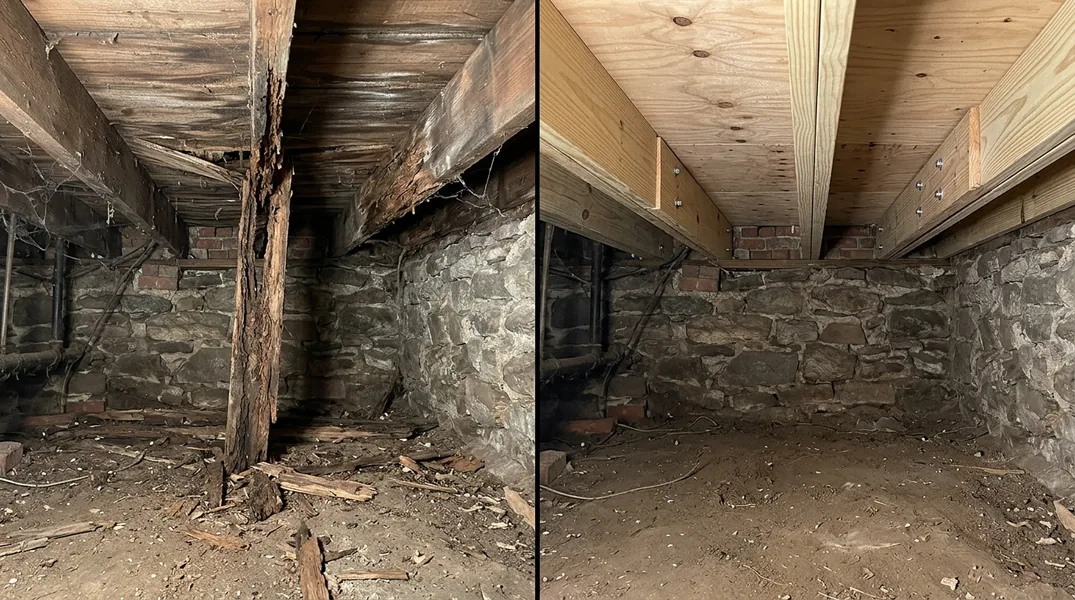
Why Are Your Floors Sagging? Common Causes in Older Fort Wayne Homes
If you live in an older home in Fort Wayne, you may have noticed that your floors aren't quite level anymore. A slight dip here, a noticeable slope there, or even a bounce when you walk across the room. Sagging floors are one of the most common structural issues homeowners face, and they're rarely just a cosmetic problem. Understanding what's causing your floors to sag is the first step toward getting them fixed properly.
The primary culprit behind sagging floors in older homes is moisture damage to the wooden structural components beneath your feet. Wood Rot & Dry Rot Repair is often necessary because water infiltration from damp basements, leaking plumbing, or poor drainage gradually weakens the floor joists that support your entire floor system. As the wood loses its strength and integrity, it can no longer bear the load evenly, causing the floor to settle unevenly. In Fort Wayne, basements are particularly vulnerable to moisture problems due to our climate and soil conditions, making this issue especially prevalent in homes built before modern waterproofing standards were implemented.
Beyond wood rot, sagging can also result from undersized joists, inadequate support posts, settling foundations, or damage from pests like termites. Sometimes a combination of these factors work together to weaken your floor structure. The key is identifying the root cause so you can address it comprehensively rather than just treating the symptoms.
The Role of Damp Basements in Floor Deterioration
Damp basements are practically a rite of passage for older Fort Wayne homeowners, but many don't realize how directly they contribute to sagging floors upstairs. When moisture seeps into your basement or crawl space, it creates the perfect environment for wood rot to develop in your floor joists. These joists sit just above your basement, making them the first casualties of moisture problems. Even if you can't see visible water pooling, persistent dampness and high humidity levels can slowly rot the wood from the inside out.
The relationship between basement moisture and upper-floor sagging is straightforward: wet wood loses its structural capacity. As rot progresses, the affected joists become softer, weaker, and eventually unable to support the weight they're designed to carry. This is why addressing damp basement conditions isn't just about preventing mold or musty smells. It's about protecting the structural integrity of your entire home. If you've noticed both sagging floors and moisture issues in your basement, these problems are almost certainly connected.
Proper basement waterproofing and drainage are essential preventive measures. However, if your floors are already sagging, you'll likely need Floor Joist & Subfloor Repair to restore structural stability. This might involve replacing damaged joists, reinforcing weakened sections, or sistering new lumber alongside compromised beams to redistribute the load safely.
Understanding Floor Joists and Why They Fail
Your floor joists are the horizontal wooden beams that run beneath your flooring, spanning from one support wall or beam to another. They carry all the weight of your floors, furniture, appliances, and people walking around. In older homes, these joists are often 2x8 or 2x10 dimensional lumber, spaced 16 inches apart. When they're healthy and properly supported, they do their job invisibly. But when rot, damage, or inadequate support weakens them, the entire floor system becomes compromised.
Floor joist failures typically occur at the ends where they rest on foundation walls or support beams, since these areas tend to accumulate moisture and experience the greatest stress. Once rot takes hold, it spreads along the grain of the wood, eating away at the material's strength. What started as a small soft spot can eventually become a significant structural liability. Many homeowners don't notice a problem until the sagging becomes obvious, which means the damage has often progressed considerably by the time repairs are sought.
The good news is that damaged joists don't always need complete replacement. A common and effective repair method is sistering, where a new piece of lumber is fastened alongside the damaged joist to share the load. This technique, known as sistering floor joists, can restore structural capacity without the disruption and expense of removing the old joist entirely. However, the extent of the damage determines whether sistering is sufficient or if full replacement is necessary. A professional inspection is essential for determining the right approach for your specific situation.
Sistering Floor Joists: A Proven Repair Solution
Sistering floor joists is one of the most effective and cost-efficient methods for repairing sagging or damaged floors. The process involves installing a new, healthy piece of lumber alongside a weakened or damaged joist, then securely fastening them together. This creates a composite beam that shares the structural load, allowing both the original joist and the new sister joist to work together. The beauty of this approach is that it preserves the existing structure while adding new strength exactly where it's needed.
The sistering process requires precision and proper materials. The sister joist must be properly sized to match or exceed the capacity of the original joist, and it must be fastened with appropriate fasteners spaced at specific intervals to ensure the two pieces work as a single unit. The connection points are critical. If fasteners are too far apart or the wrong type is used, the joists won't transfer loads effectively, and the repair won't achieve its intended purpose. This is why professional installation matters significantly more than the cost of materials.
Not every sagging floor can be fixed with sistering alone. If the damage is extensive, if multiple joists are affected, or if the underlying support system is inadequate, a more comprehensive repair plan may be necessary. This could include Beam Replacement & Load-Bearing Wall Removal work, additional support posts, or a combination of strategies. A thorough structural assessment determines which approach will provide the most reliable, long-lasting solution for your home.
How to Know If Your Floor Needs Professional Repair
Several warning signs indicate that your sagging floor requires professional attention sooner rather than later. The most obvious is visible sagging or unevenness. If you notice that a room slopes noticeably, if marbles roll across your floor, or if you can see daylight under a closed door, these are clear indicators of structural issues. You might also notice doors and windows that don't close properly, cracks in walls or ceilings, or a bouncy or squeaky feel when walking across the floor. Any of these symptoms warrant a professional inspection.
Beyond visual signs, pay attention to moisture conditions in your basement or crawl space. If you see water stains on joists, smell musty odors, or notice soft or discolored wood, rot is likely present. Soft wood that yields easily to a screwdriver or awl is a red flag. Additionally, if you've had plumbing leaks, roof leaks, or any water intrusion events, inspect the area directly above for signs of joist damage. Early detection of rot prevents it from spreading and keeps repair costs manageable.
The longer you wait to address sagging floors, the more extensive and expensive repairs become. Small problems that could be fixed with sistering or localized reinforcement can develop into situations requiring major structural work. If you're concerned about your floors, the best first step is to contact Fort Wayne Carpentry for a free estimate. A professional inspection can identify the root cause and recommend the most appropriate repair strategy for your home's specific situation.
Sagging Floor Repair Cost in Fort Wayne: What to Budget
The cost of sagging floor repair varies significantly depending on the extent of damage, the number of joists affected, the accessibility of the affected area, and the repair method required. Sistering a single joist might cost considerably less than replacing multiple joists or installing new support posts. For a rough sense of what to expect, simple sistering repairs for one or two joists might range from a few hundred dollars, while more extensive work involving multiple joists, new support posts, or beam work could range into the thousands. The only way to know your actual pricing is through a professional evaluation.
It's important to view sagging floor repair as an investment in your home's structural integrity and safety, not just an expense. Delaying repairs can lead to exponentially higher costs down the road. Water damage spreads, rot progresses, and structural problems compound. Additionally, if you're planning to sell your home, sagging floors are a major red flag for buyers and inspectors. Addressing these issues proactively protects your investment and ensures your home remains safe and sound for years to come.
Fort Wayne Carpentry provides transparent pricing and detailed estimates so you understand exactly what work is needed and what it will cost. We recommend getting a professional assessment rather than guessing about the scope of work required. Call us at (260) 300-5243 or visit our website to schedule your inspection today. The sooner you address sagging floors, the better your long-term outcomes will be.
Looking for a professional carpentry contractor in Fort Wayne? Fort Wayne Carpentry responds fast for all your carpentry needs.
Get a Free QuoteOur services: Wood Rot & Dry Rot Repair · Termite Damage Repair · Floor Joist & Subfloor Repair