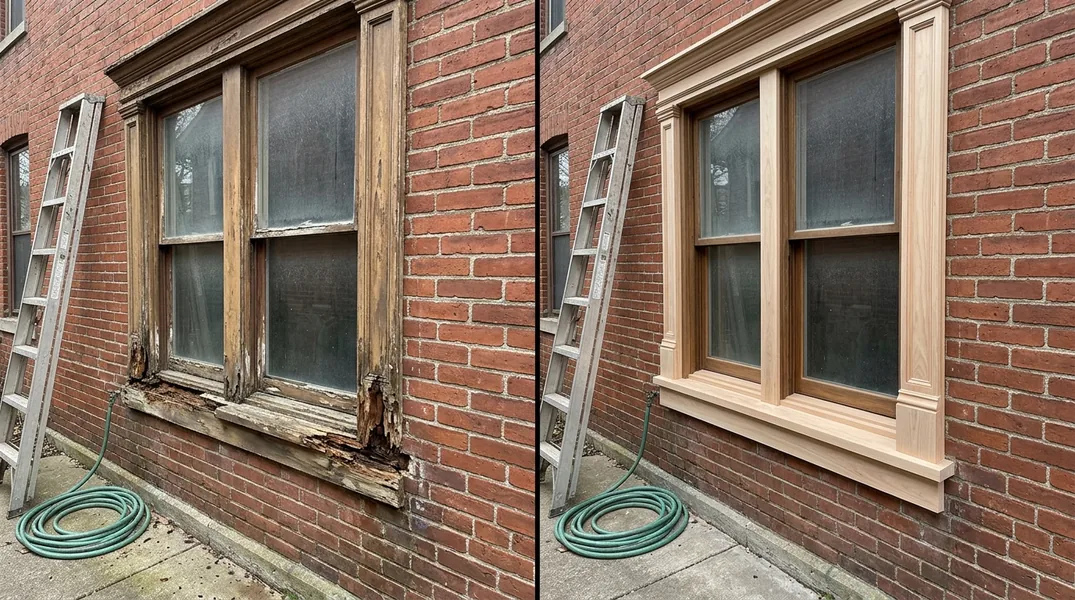
When Can You Actually Repair Rotted Wood Without Replacing It?
One of the most common questions we hear at Fort Wayne Carpentry is whether rotted wood can be saved or if it needs to come out entirely. The truth is, it depends on the extent of the damage and the structural importance of the affected wood.
If the rot is superficial and confined to the outer layers of the wood, repair is often possible. This typically happens when moisture exposure is relatively recent and hasn't penetrated deep into the structural fibers. In these cases, Wood Rot & Dry Rot Repair specialists can remove the affected portion, treat the underlying moisture issue, and apply epoxy fillers or consolidants to restore strength. The key is catching the problem early before it spreads throughout the entire board or beam.
However, if the rot has compromised more than 25-30% of a structural member's cross-section, or if it's located in a critical load-bearing area, replacement becomes the safer and more cost-effective choice. Trying to repair severely rotted wood in these situations can create liability issues and may fail under stress. That's why a professional inspection is essential before you decide which direction to go.
Understanding Termite Damaged Wood Repair vs. Complete Replacement
Termite Damage Repair presents a different set of challenges than dry rot or water damage. Termites don't just create surface damage; they tunnel through wood, leaving galleries and weakened pathways that may not be immediately visible. This means the structural integrity can be compromised far more extensively than what you see on the surface.
If you've discovered termite damage in your Fort Wayne home, the first step is a thorough pest control treatment to eliminate the colony. Once that's complete, a carpenter can assess whether the damage is repairable or if the affected wood sections need replacement. Small areas of termite damage in non-structural trim or fascia boards can often be repaired with wood fillers and sealants. But if the damage extends into floor joists, wall studs, or roof trusses, replacement is typically necessary.
The reason replacement is often recommended for termite damage is that the wood's structural capacity has been permanently compromised. Even if you fill the galleries and treat the surface, you can't restore the original strength. Insurance companies and building codes in most cases require replacement of structurally significant wood that's been infested, so it's worth understanding your obligations before deciding on a repair approach.
Replace Rotted Wood Siding: A Practical Look at Your Options
Siding is one of the most visible and vulnerable parts of your home. When wood siding starts to rot, you're facing both an aesthetic problem and a functional one. Rotted siding no longer provides proper weather protection, and it can allow moisture to penetrate into the sheathing and framing behind it.
In most cases, rotted wood siding should be replaced rather than repaired. Siding takes the brunt of weather exposure, and once wood siding begins to deteriorate, the damage usually spreads quickly. Attempting to patch small sections often leads to more problems down the road as moisture continues to work its way into adjacent boards. Full replacement of affected siding sections is more durable and provides better long-term protection for your home's exterior.
When replacing siding, you have the option to use traditional wood (cedar or pine), fiber cement board, or composite materials. Each has different durability profiles and maintenance requirements. If you're in the Huntertown area or anywhere in the region, discussing material options with a local carpenter can help you choose the best solution for your climate and budget. The investment in quality replacement siding is typically recovered through improved home protection and curb appeal.
Wood Rot & Dry Rot Repair Cost in Fort Wayne: What to Budget
Understanding the pricing for wood rot repair is crucial for homeowners planning their budgets. The cost of Wood Rot & Dry Rot Repair varies significantly based on several factors: the extent of the damage, the location of the affected wood, whether structural members are involved, and whether you're repairing or replacing.
For minor repairs in non-structural areas like trim, fascia, or soffits, you might expect to spend anywhere from $300 to $1,500 depending on the square footage affected and how accessible the damage is. These repairs typically involve removing the damaged section, treating the underlying moisture source, and installing new wood or epoxy filler.
Structural repairs are considerably more expensive. If rot has affected floor joists, beams, or wall studs, costs can range from $1,500 to $5,000 or more per affected area. This is because the work often requires temporary support systems, careful removal of the damaged wood, and precise replacement to maintain structural integrity. Floor Joist & Subfloor Repair is a common service in older homes throughout the region, and the investment is essential for safety.
The most cost-intensive situations involve Beam Replacement & Load-Bearing Wall Removal, which can run $3,000 to $10,000 or more depending on the span and complexity. Rather than guessing at costs, we recommend getting a free estimate from a qualified local contractor. Call Fort Wayne Carpentry at (260) 300-5243 to schedule an inspection and receive an accurate quote for your specific situation.
How to Tell If Wood Damage Is Repairable or Needs Full Replacement
The decision between repair and replacement ultimately comes down to three key factors: the depth of penetration, the structural importance of the affected wood, and the cost-benefit analysis of each option.
Depth of penetration is the first consideration. If you can press a screwdriver or awl into the wood and it stops after a quarter inch or so, the damage is likely superficial and repairable. If the tool sinks in easily for half an inch or more, or if the wood feels spongy throughout, you're dealing with more extensive damage that probably warrants replacement. The moisture content is another telling sign; wood that feels wet or smells strongly of mold has typically been compromised beyond simple surface repair.
Structural importance matters enormously. Wood in decorative trim, fascia boards, or non-load-bearing walls can often be repaired even if the damage is moderate, because failure won't compromise your home's safety. But wood in floor joists, load-bearing beams, roof trusses, or wall studs requires a much higher standard. Any significant damage in these areas should result in replacement to ensure your home remains safe and sound.
Finally, consider the economics. Sometimes repair costs nearly as much as replacement, especially when you factor in the labor to remove damaged sections and install supports. In these cases, replacement is the smarter choice. If you're uncertain about your specific situation, Fort Wayne Carpentry offers professional inspections to help you understand your options. Contact us at (260) 300-5243 or request a free estimate to get expert guidance tailored to your home.
Prevention: The Best Strategy for Rotted and Insect-Damaged Wood
While knowing when to repair or replace is important, the best approach is preventing rot and insect damage from occurring in the first place. Most wood rot and termite damage stems from moisture problems that go unaddressed for months or years. By controlling moisture around your home, you can dramatically reduce the risk of costly repairs down the line.
Start by ensuring gutters and downspouts direct water away from your foundation and siding. Check caulking around windows and doors regularly, and seal any gaps where water might penetrate. Keep soil graded away from your foundation, maintain proper ventilation in crawl spaces and attics, and address any plumbing leaks promptly. If you notice soft spots, discoloration, or a musty smell in any wood areas, have them inspected immediately rather than waiting for the problem to worsen.
For termite prevention, maintain a one-foot clearance between soil and any wood framing, avoid storing firewood against your home, and have your property inspected annually by a pest control professional. Many termite colonies go undetected for years because homeowners don't know to look for the early warning signs.
If you're in Leo-Cedarville or anywhere in the Fort Wayne area and suspect you have wood damage, don't delay. Early detection and intervention can save you thousands of dollars in repair costs. Contact Fort Wayne Carpentry today at (260) 300-5243 to schedule your inspection and get expert advice on protecting your home.
Looking for a professional carpentry contractor in Fort Wayne? Fort Wayne Carpentry responds fast for all your carpentry needs.
Get a Free QuoteOur services: Wood Rot & Dry Rot Repair · Termite Damage Repair · Floor Joist & Subfloor Repair