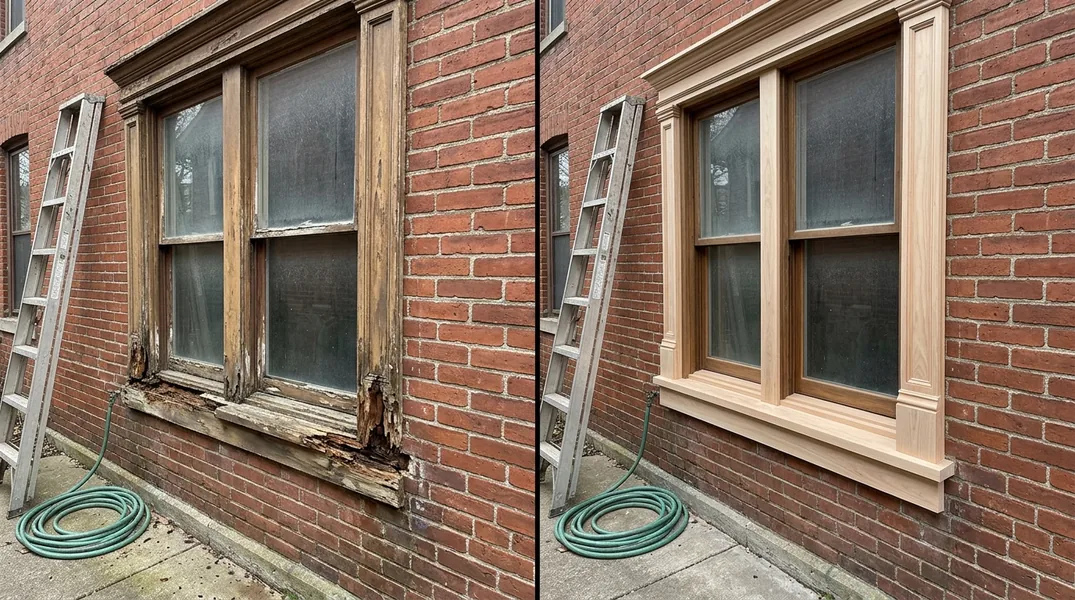
The Charm and Challenge of West Central Victorian Homes
There's something undeniably beautiful about the Victorian homes that line the streets of West Central Fort Wayne. Their ornate trim, wraparound porches, and intricate architectural details tell the story of a neighborhood built during America's gilded age. But that same charm comes with a responsibility: these homes demand serious, ongoing wood maintenance.
Victorian architecture relies heavily on wood for both structural and decorative purposes. Exterior trim, fascia boards, window frames, porch columns, and siding are all vulnerable to the elements. In Fort Wayne's climate, with its freeze-thaw cycles, spring rains, and humid summers, wood deterioration isn't a question of if, but when. Many Victorian homeowners discover that neglecting wood care for just a few years can result in significant damage requiring professional intervention.
Understanding Wood Rot in Historic Homes
Wood Rot & Dry Rot Repair is one of the most common issues we encounter in older homes throughout the region. Wood rot develops when moisture penetrates wood and fungi begin to break down the cellulose structure. Dry rot, despite its name, also requires moisture to start, though it can spread to seemingly dry wood over time. The problem is insidious because it often hides behind paint, siding, or trim until substantial damage has already occurred.
In Victorian homes, wood rot frequently starts in areas where water naturally collects or sits: around window sills, where gutters overflow, along the base of exterior walls, and underneath porches. The decorative elements that make these homes special, like ornamental brackets and detailed trim work, create pockets where moisture can linger. By the time you notice soft wood, discoloration, or paint bubbling, the rot may have already compromised the structural integrity of that component.
Foursquare Houses and Their Specific Wood Vulnerabilities
South Wayne's Foursquare homes represent a different architectural style, but they face equally serious wood maintenance challenges. Built primarily between 1900 and 1930, these solid, boxy homes feature heavy wood siding, substantial roof overhangs, and deep porches. While their simpler design is less ornate than Victorians, the extensive use of wood siding means a larger surface area exposed to weather damage.
Foursquare homes often have original or near-original wood siding that has been painted and repainted for decades. This layered paint can actually trap moisture against the wood underneath, accelerating rot development. Additionally, the generous roof overhangs and porch structures, while architecturally pleasing, create areas where water runoff isn't always managed properly. Poor gutter maintenance, missing downspouts, or improper grading around the foundation can all lead to chronic moisture problems that compromise the wood siding and underlying structure.
Wood Siding Repair: Preservation vs. Replacement
When you discover damage to wood siding on your historic home, you face an important decision: repair the damaged sections or replace the entire run of siding. This choice has implications for both your home's authenticity and your budget. Many homeowners in Fort Wayne want to preserve the original character of their homes while ensuring they're protected from future damage.
Targeted wood siding repair makes sense when damage is localized to a few boards or a specific area. A skilled carpenter can carefully remove affected boards, treat any underlying rot, and install matching replacement pieces. This approach maintains the home's historic integrity and is often more cost-effective than a full siding replacement. However, if rot has spread extensively, if the siding is severely compromised, or if the underlying structure shows damage, replacement may be the better long-term investment. The key is having a professional assess the situation early, before small problems become catastrophic ones.
Preventive Maintenance: Your Best Defense
The most cost-effective approach to wood maintenance in historic homes is prevention. Regular inspections, typically twice per year, can catch problems before they escalate. In spring, check for winter damage and ensure gutters and downspouts are clear and functioning properly. In fall, prepare your home for the upcoming winter by sealing any gaps, repainting exposed wood, and ensuring proper drainage around the foundation.
Pay particular attention to areas where wood meets masonry, where different materials connect, and anywhere water naturally flows. Keep gutters clean and ensure downspouts direct water at least four to six feet away from your foundation. Maintain caulking around windows and doors. Touch up paint on exposed wood trim annually or as needed. Ensure landscaping doesn't trap moisture against your home's exterior. These simple, regular actions can add decades to the life of your wood components and help you avoid the need for major repairs down the road.
If you notice any signs of trouble, such as soft spots in wood, paint bubbling, discoloration, or visible gaps in siding, don't wait. Early intervention is far less expensive and disruptive than waiting until damage is extensive. Contact Fort Wayne Carpentry at (260) 300-5243 to schedule a free estimate and get professional guidance on your specific situation.
When to Call a Professional for Historic Home Repairs
While some homeowners enjoy tackling maintenance projects themselves, historic home wood repair often requires specialized knowledge and skills. Matching original materials, understanding period construction techniques, working with old growth wood that may behave differently than modern lumber, and ensuring repairs maintain the home's architectural integrity all demand experience. Additionally, if structural components like floor joists, beams, or load-bearing walls are involved, the work absolutely requires professional expertise.
If you discover evidence of Termite Damage Repair needs, structural issues, or extensive rot, professional assessment is essential before proceeding with any repairs. Some damage may require Floor Joist & Subfloor Repair or even Beam Replacement & Load-Bearing Wall Removal in severe cases. Fort Wayne Carpentry has years of experience working with historic homes throughout the region and understands the unique challenges they present. We can help you determine what repairs are truly necessary, what can be preserved, and what represents the best value for your investment.
Planning Your Wood Maintenance Budget
Historic homeowners often ask about the cost of maintaining their properties. The answer depends on many factors: the extent of existing damage, the size of your home, the materials involved, and how quickly problems need to be addressed. A small localized repair might cost a few hundred dollars, while extensive siding replacement or structural repairs could run into the thousands.
Rather than viewing maintenance as an expense, consider it an investment in your home's longevity and value. A Victorian or Foursquare home that's well-maintained will appreciate and provide years of enjoyment. One that's neglected will deteriorate rapidly, with repair costs escalating dramatically. For a clear understanding of what your specific situation will cost, reach out to Fort Wayne Carpentry. We provide transparent pricing and detailed explanations of what work is needed and why. Call us at (260) 300-5243 or visit our website to request a free estimate today.
Looking for a professional carpentry contractor in Fort Wayne? Fort Wayne Carpentry responds fast for all your carpentry needs.
Get a Free QuoteOur services: Wood Rot & Dry Rot Repair · Termite Damage Repair · Floor Joist & Subfloor Repair